Gradual Reduction vs. Cold Turkey: Which Works Better for Quitting Porn? (My Adlerian Approach)
“I swear that today will be my last time watching this.”
But a few days later, I would find myself right back in that familiar state. My mind and body were prepping for the inevitable roller coaster drop, and I simply couldn’t help but release the tension I had been holding onto for days.
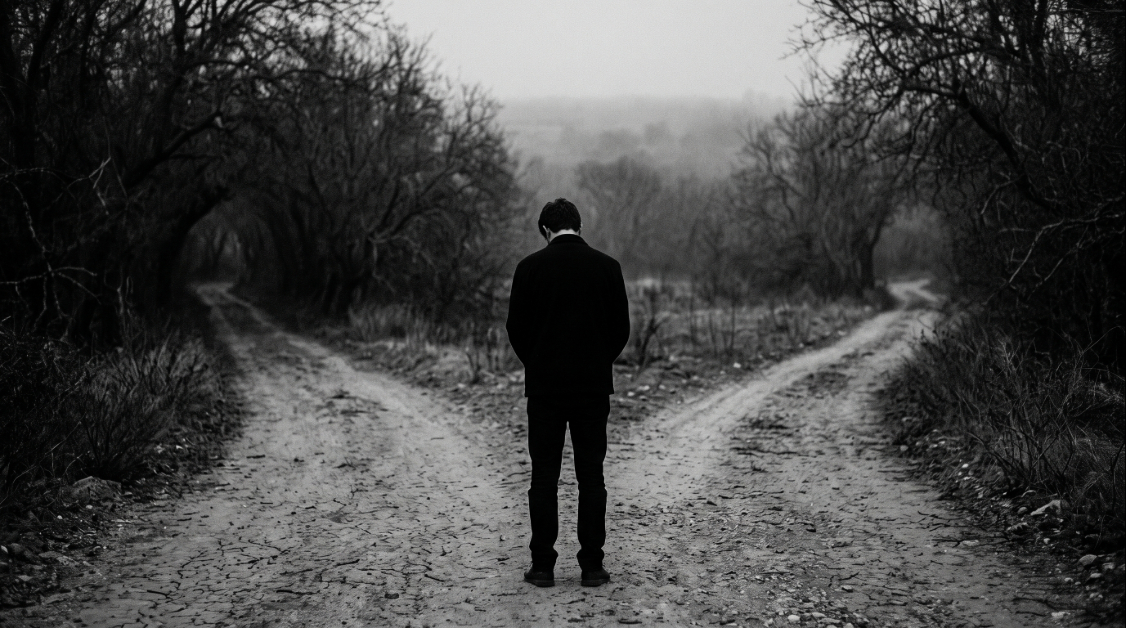
As the shame washed over me, the same question rose again: Should I try to quit porn cold turkey, or gradually reduce my usage?
The simplest answer I could find is that quitting cold turkey can either save you or break you. And for me, it usually just led to a harder crash.
Because of that, I leaned toward gradual reduction. But I didn’t just cut back—I adopted Adlerian psychology principles to channel my lingering energy toward meaning and personal growth. I kept building that momentum until porn consumption simply no longer fit into my life.
That mindset shift changed everything for me, and that is exactly what I am going to share with you today.
Understanding the “Why” Before the “How” (The Adlerian Lens)
I always thought my addiction to porn was purely about sexual desire and biological urges. Little did I know, I was doing it for reasons I wasn’t even consciously aware of.
A bad day at work, an argument with someone I cared about, or even just the fear of starting something new could trigger my habit. It was my go-to escape when life got hard, when I lacked the courage for real intimacy, or when I felt completely lonely.
My porn use wasn’t random. It was perfectly designed to keep me in a safe, predictable loop of inaction. By escaping into a screen, I didn’t have to face my real-world problems. But by taking no action, it also meant I was slowly losing all respect for myself in the face of adversity.
After studying the Adlerian framework, I understood one simple but powerful truth: the method you choose to quit doesn’t matter if you aren’t aware of what purpose the habit is serving.
Once I looked closely, I saw a direct link between my porn usage and the life tasks I was actively trying to avoid.
The Cold Turkey Trap: Perfectionism and Discouragement
If you think you can just white-knuckle porn addiction, you have no idea what you are up against. Imagine building a habit for years, wiring your brain to expect unnaturally high rewards, and then one day deciding to cut it off completely.
Starving yourself of dopamine all at once means fighting a survival system your own brain designed to protect you. That is exactly what I tried to do—and I failed time and time again.
I still vividly remember my first attempt to quit cold turkey years ago. It was a disaster. I didn’t even last two days. The shame and guilt I carried for the rest of the week were unbearable. Those negative emotions took a literal toll on my body; I walked around looking like a man who had just watched his ship, filled with everything he owned, sink to the bottom of the ocean.
When you try to stop all at once, your self-respect is constantly on the line. How can you promise yourself you are going to do something, fail, and still expect to grow? I went so hard on myself, not realizing I was fighting something way bigger than my own willpower.
Even the online recovery culture started to bug me. People would always ask, “What is your longest streak?” I remember thinking, Is this a game we are playing? My entire life was falling apart because of this addiction. Was a “streak” supposed to fix the root cause? Was counting days really going to help me build a better life?
Every time I committed to stopping entirely, I became hyper-aware of the struggle, trapping myself in a mental battle I knew I was going to lose. That was when I started seriously weighing my options: weaning off porn vs stopping completely. I realized I needed a real strategy, not just blind willpower.
The truth is, the habit served a purpose. None of it was random.
I eventually realized I was using porn to compensate. I didn’t know how to navigate real life properly, so I found an outlet. It was a way to soothe the pain of not feeling like I was enough, of failing my goals, and of feeling inferior to others.
Gradual Reduction: Building “Courage” Step-by-Step
Weaning off looked like a solid strategy when I first started. However, there was a major catch.
Gradual reduction can be incredibly tricky for the brain. Because I was still allowing myself to watch it, I was technically still hooked, and my mind registered that pattern. I felt like I was swimming against a current. Even if the current wasn’t overwhelmingly strong, it made it hard to notice any real progress in my life. Plus, the moment life hit me hard, I quickly reverted to being a heavy user just to avoid my problems or compensate for my failures.
For me, stopping porn gradually worked much better than quitting all at once—but it required a massive twist.
I stopped obsessing over the addiction itself. Instead, my entire focus shifted to figuring out the Adlerian “life tasks” (work, friendships, and intimacy) that needed fixing on a deep, identity level. I knew that when things inevitably went south, I needed an identity I had deliberately chosen. That new identity is what lent me the courage to face life with an equipped mind, ready to take on challenges rather than hiding from them in front of a screen.
While I was doing this internal work, yes, I was still trapped. I still had the habit. But by combining gradual reduction with this intense focus on my new identity, I started casting votes for the man I was becoming.
Little by little, the addiction shifted into something I only did occasionally. But the biggest shift wasn’t the frequency; it was the shame. The crushing emotional weight I used to carry after each session started to lift.
I wasn’t punishing myself anymore. At that moment, I knew I was finally on the right track.
What Actually Worked For Me: My Personal Blueprint
Quitting cold turkey just didn’t click for me the way gradual reduction did. Since I knew I couldn’t stop all at once, I decided to adopt a completely new lifestyle. I needed a massive paradigm shift: I had to stop feeling like a victim of my circumstances and start being proactive about my life.
Here is the exact, step-by-step blueprint of how I did it.
1. The Paradigm Shift
Real change happens on a deeper level. I had to accept that my porn addiction wasn’t the root problem; it was just a symptom,a consequence of avoidance, escapism, and pure exhaustion. Acknowledging what I was actually running from laid the groundwork for everything that came next.
2. The “Fictional Final Goal” (Identity-Based Goal Setting)
For years, my daily actions aligned perfectly with my deepest desire at the time: I just wanted to survive and get through the day. And that is exactly what I got. But the moment I set a goal based on a new identity and committed to it through tiny, zero-friction habits, I realized I didn’t even need the addiction to begin with.
I decided I wanted to be a strong man for my family and my kid. So, I built a habit of going to the gym at least three times a week. Even if I only spent 15 minutes doing one single exercise, I showed up. It wasn’t about the physical training; it was about proving to myself that I was a fit man who had the courage to follow through.
I applied the same logic to my work. I started actively working on projects and finally launching them. My gradual reduction of porn happened naturally because I shifted my focus away from quitting, and instead poured my energy into finding the courage to do what I should have done years ago.
3. Community and Contribution
Connecting with like-minded people, feeling a genuine sense of belonging, and providing value to a community is what actually allowed me to grow as a person. I am still growing to this day, thanks to the support and love I get from others—and the genuine contribution I try to make for the greater good in return. That is where the real healing happened.
When I found something I was passionate about and good at, I used it to serve others. In return, I got the drive and courage to do more and be more.
Isolation, on the other hand, is where my addiction thrived. When I was alone, I had no goal bigger than myself. I had no cause that demanded my best. I always tapped out when I felt isolated because that was exactly when I felt unloved, unmotivated, and like a complete failure. And sadly, that was always the exact moment I needed a “way out” the most.
3 Steps to Apply This to Your Own Journey
3 Steps to Apply This to Your Own Journey
To consider yourself truly free from the grip of porn, you have to see the battle differently. The cycle I was trapped in was vicious, and you are probably stuck in it right now. I know exactly how the shame and emotional weight drag you down.
It is time to try what worked for me. Here is how you can apply this framework to your own life in three steps:
1. Break the Cycle from the Weakest Point
For me, breaking the cycle meant identifying the weakest point that fed the addiction: the shame of relapsing.
Instead of constantly asking, “What is wrong with me?” I started managing my emotions differently. I realized that a slip-up is not a weakness; slipping is just data. Feeling ashamed wasn’t going to help me. Instead, I used that exact moment of failure to do something positive and interrupt the pattern.
What does this mean for you? Have a goal that ties deeply to your identity, and create a frictionless habit you can run to whenever those negative emotions hit. For me, it was writing articles to help others. For you, it might be learning a language or reading ten pages of a book. Whenever you slip (or feel like you are about to), do 10 to 15 minutes of that exact activity. This links the discomfort of the urge directly to your life goals. Little by little, you will feel a natural drive to work on your own life whenever that mental state rises.
2. Define Your Limits Honestly
Weaning off is tricky. If it isn’t done right, you just feel like a failing addict. Stopping cold turkey works for some people because it instantly tricks their subconscious into feeling like progress is happening. But if you choose gradual reduction, it cannot just be about stopping; it has to be about breaking patterns.
What does this mean for you? Take 30 minutes tonight with a piece of paper. Figure out exactly when you are most vulnerable during the day. For most of us, it is bedtime.
When the night came, I was always upset. I would lie there thinking about how much better my day would be if I was just better at my job, or I felt unloved because I lacked the courage to talk to a woman I liked. I felt inferior, so I used porn to compensate.
To break this loop, I asked myself two questions: What am I feeling right now, and what am I trying to avoid? Then, I built a frictionless routine for that exact moment:
- If I felt unloved: I focused on self-care. I stretched, took a hot shower, and journaled by only talking nicely about myself. You cannot expect love if you don’t love yourself first.
- If I felt inferior about work: I spent 15 minutes writing one simple paragraph I could feel proud of the next morning. (I briefly tried learning graphic design at night, but quickly abandoned it because being on a computer screen was too triggering. I learned to do this with no screens around).
Over time, the compound effect of these habits completely protected me during my most vulnerable time.
3. Move Toward Connection
Whether online or offline, building relationships was the single most important part of my journey. Meaningful connections helped me get through the dark days. They gave me a sense of purpose and allowed me to share things I never thought I could say out loud.
A community—like the one we are building here at Hookedless.com—creates a bond stronger than any addiction. Sharing milestones, helping each other, and growing together builds immense self-awareness.
But it only works if your intention is to serve others without expecting anything in return. When you realize your goals aren’t just about you, and that whatever you do is for the greater good, that is where the real healing happens.
Final Thoughts: Building a Life Where the Habit Doesn’t Fit
At the end of the day, arguing over whether to quit cold turkey or gradually cut back is like arguing over what kind of bucket to use while your ship is actively sinking. The bucket you choose doesn’t matter if you aren’t fixing the hole in the hull.
For me, that hole was a lack of meaning, a deep fear of failure, and total isolation.
Gradual reduction ended up being the right path for me, but not because it was some magic formula. It worked because it gave me the breathing room to drop the crushing weight of shame. It bought me time to start casting votes for my new identity and to build a man I actually respected.
Porn addiction thrives in the dark. It feeds on you when you are alone, stressed, and feeling like you just aren’t enough. The way out isn’t just about fiercely fighting the urge; it is about building a life full of courage, purpose, and community where that urge simply no longer has a place to live.
I am sharing all of this here on hookedless.com because I know exactly how heavy that shame feels, and I want you to know that you don’t have to carry it alone anymore.
What about you?
Are you currently stuck in the brutal cold turkey loop, or are you ready to start gradually building that new identity? Let me know in the comments below—I read every single one, and we are in this together.